
Are Rice Cakes Good for Weight Loss? Nutritionist Explains
Rice cakes have long been marketed as a healthy, low-calorie snack option for people trying to lose weight. You’ve probably seen them in grocery store aisles, advertised as a guilt-free alternative to chips and crackers. But the question remains: are rice cakes actually beneficial for weight loss, or are they just another processed food masquerading as a health food? As a nutritionist, I’m here to break down the science behind rice cakes and help you understand whether they deserve a place in your weight loss journey.
The truth is more nuanced than a simple yes or no. Rice cakes can be part of a weight loss plan, but they’re not a magic solution, and they come with some important considerations you need to understand. In this comprehensive guide, we’ll explore the nutritional profile of rice cakes, examine their impact on your metabolism and satiety, compare them to other snack options, and provide practical recommendations for incorporating them into a balanced, sustainable weight loss strategy.
Nutritional Profile of Rice Cakes
Let’s start with the basics. A single plain rice cake typically contains around 35 calories and 7 grams of carbohydrates, with minimal fat and protein. On the surface, this seems like an excellent choice for weight loss—after all, fewer calories should theoretically lead to weight loss when combined with a calorie deficit. However, understanding what’s in that rice cake is crucial for making informed dietary decisions.
Most plain rice cakes are made from just three ingredients: rice, salt, and sometimes a binding agent. They’re gluten-free by nature and contain no added sugars in their basic form. The carbohydrates in rice cakes are primarily simple carbohydrates, which means your body breaks them down quickly. A single rice cake provides minimal nutritional density—you’re getting very few vitamins, minerals, or phytonutrients relative to the space it takes up in your stomach.
The protein content is particularly noteworthy: plain rice cakes contain less than 1 gram of protein per cake. This is a significant limitation when it comes to weight loss, as weight loss and blood sugar levels are heavily influenced by macronutrient composition. Protein is essential for maintaining muscle mass during weight loss, keeping you feeling full longer, and supporting your metabolism.
Fiber content is equally minimal—most plain rice cakes contain less than 1 gram of dietary fiber. Fiber is one of the most important nutrients for weight loss because it slows digestion, stabilizes blood sugar, and promotes satiety. Without adequate fiber, a rice cake is essentially a rapidly-digested carbohydrate that doesn’t provide much satisfaction.
Blood Sugar and Satiety Impact
This is where rice cakes reveal their most significant limitation for weight loss. Because rice cakes are made from refined grains and lack protein and fiber, they cause a rapid spike in blood glucose levels. According to research published in the American Journal of Clinical Nutrition, white rice and products made from white rice have a high glycemic index (GI), typically ranging from 72-96 depending on processing.
When your blood sugar spikes rapidly, your pancreas releases insulin to bring it back down. This creates a cycle of energy highs and crashes that can actually increase hunger and cravings, particularly for more carbohydrates. Studies show that foods with a high glycemic index are less satiating than low-glycemic alternatives, meaning you’ll feel hungry again sooner after eating a rice cake compared to other snacks with more balanced macronutrients.
This satiety issue is critical for weight loss success. If you eat a plain rice cake with nothing on it, you’ll likely experience hunger within 30-60 minutes. This can lead to overeating later in the day and ultimately consuming more calories than you would have with a more satisfying snack. The hunger-promoting effect of rapid blood sugar spikes can sabotage your weight loss efforts, even if the rice cake itself is low in calories.
For people managing blood sugar levels or dealing with insulin resistance, rice cakes are particularly problematic. If you’re interested in understanding how your food choices affect your metabolic health, our guide on weight loss and blood sugar levels provides detailed insights into this relationship.
Rice Cakes vs. Other Snack Options
To properly evaluate whether rice cakes are good for weight loss, we need to compare them to realistic alternatives you might eat instead. Let’s examine how rice cakes stack up against other popular snack choices:
Rice Cakes vs. Whole Grain Crackers: A serving of whole grain crackers contains more fiber (typically 2-3 grams) and often more protein than rice cakes. The higher fiber content means slower digestion and better satiety, making whole grain crackers a superior choice for most people trying to lose weight.
Rice Cakes vs. Nuts: A small handful of almonds (about 23 almonds) contains 160 calories but provides 6 grams of protein, 3.5 grams of fiber, and healthy fats that promote satiety. While higher in calories than a rice cake, almonds will keep you satisfied much longer, potentially preventing overeating later.
Rice Cakes vs. Greek Yogurt: A 100-calorie serving of plain Greek yogurt contains 15-20 grams of protein and minimal carbohydrates. This protein content makes it far more satiating than a rice cake and supports muscle preservation during weight loss.
Rice Cakes vs. Popcorn: Air-popped popcorn is a whole grain containing fiber and has a lower glycemic index than rice cakes. Three cups of air-popped popcorn contains about 93 calories and provides 3.5 grams of fiber, making it more satisfying than a rice cake.
This comparison reveals that while rice cakes are low in calories, many alternative snacks provide better nutritional value and superior satiety for weight loss goals. However, rice cakes aren’t inherently bad—they’re simply not optimal when eaten plain.
How to Use Rice Cakes for Weight Loss
If you enjoy rice cakes and want to include them in your weight loss plan, the key is strategic pairing. Never eat a plain rice cake if weight loss is your goal. Instead, use rice cakes as a vehicle for more nutritious toppings that increase their protein, fiber, and fat content.
The principle here is simple: add foods that slow digestion and increase satiety. When you pair a rice cake with protein and healthy fats, you fundamentally change its metabolic impact. A rice cake topped with almond butter and sliced banana becomes a more balanced snack with protein, healthy fats, and fiber working together to stabilize blood sugar and promote fullness.
Consider rice cakes as a base rather than a complete snack. Think of them similarly to how you might use whole grain bread—the foundation matters, but the toppings determine the nutritional value. By being intentional about what you add, rice cakes can become a reasonable part of a weight loss diet.
Portion control remains important, however. It’s easy to consume multiple rice cakes without realizing it, especially if you’re snacking mindlessly. One or two rice cakes with appropriate toppings is a reasonable snack; five or six rice cakes with minimal toppings is excessive and will derail your calorie goals.
If you’re looking to diversify your snack options, explore our comprehensive guide on weight loss smoothies, which offer superior nutritional density and satiety compared to rice cakes alone. Smoothies allow you to combine protein, fiber, healthy fats, and micronutrients in a single snack.
Best Toppings and Combinations
To make rice cakes work for weight loss, pair them with nutrient-dense toppings. Here are evidence-based combinations that maximize satiety and nutritional value:
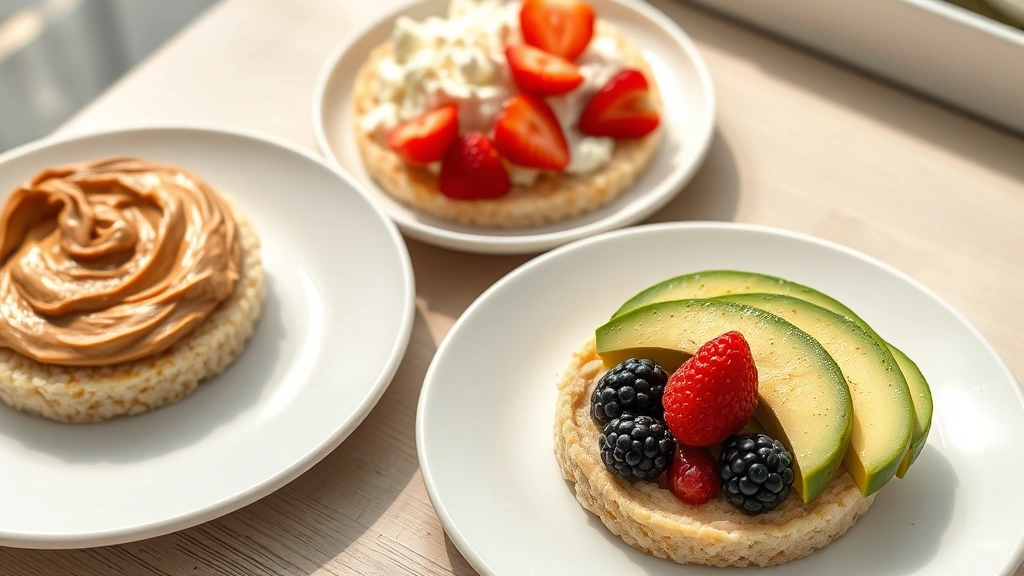
- Nut Butter and Berries: 1 tablespoon of almond or peanut butter (95 calories) plus a handful of blueberries (40 calories) creates a snack with protein, healthy fats, fiber, and antioxidants. Total: approximately 170 calories with excellent satiety.
- Cottage Cheese and Everything Seasoning: ½ cup of low-fat cottage cheese (55 calories) provides 14 grams of protein. Add everything bagel seasoning for flavor without calories. This combination is exceptionally satiating.
- Hummus and Vegetables: 2 tablespoons of hummus (70 calories) topped with sliced cucumber, tomato, and bell pepper provides protein from chickpeas, fiber from vegetables, and volume that increases satiety.
- Mashed Avocado and Lime: ¼ avocado (60 calories) mashed with lime juice and sea salt provides healthy monounsaturated fats that slow digestion and promote satisfaction.
- Tuna Salad: 2-3 ounces of canned tuna (50-75 calories) mixed with Greek yogurt instead of mayo creates a protein-packed topping with minimal calories.
- Egg Salad: Hard-boiled egg mashed with mustard and herbs provides complete protein and important micronutrients.
The key principle is always combining your rice cake with at least one source of protein and ideally a source of healthy fat. This nutritional strategy transforms a potentially problematic snack into a reasonable component of a weight loss diet.

Potential Drawbacks
Beyond the satiety and blood sugar issues, there are several other considerations when evaluating rice cakes for weight loss:
Arsenic Content: Rice and rice products can accumulate arsenic from soil and water. While the FDA maintains that rice consumption within normal dietary patterns is safe, some researchers recommend varying your grain sources rather than relying heavily on rice products. If you eat rice cakes regularly, consider alternating with other whole grain snacks.
Lack of Micronutrients: Plain rice cakes provide minimal vitamins and minerals. For weight loss to be sustainable and healthy, you need nutrient-dense foods that support your metabolism and overall health. Rice cakes contribute calories without meaningful micronutrient support.
Highly Processed: Despite appearing simple, rice cakes are processed foods. The rice is refined, removing the bran and germ where most nutrients reside. Whole foods and minimally processed options are generally superior for weight loss and health.
Easy to Overconsume: The low calorie density of rice cakes makes them easy to eat in large quantities without feeling satisfied. Many people find themselves eating 5-10 rice cakes in a sitting, consuming 175-350 calories of a food that doesn’t significantly reduce hunger.
May Increase Cravings: The rapid blood sugar spike and subsequent crash can trigger cravings for more carbohydrates and sugar. This can create a problematic cycle where eating rice cakes actually increases your overall food intake.
Incorporating Rice Cakes Into a Comprehensive Weight Loss Strategy
Rice cakes can have a place in a weight loss plan, but only as part of a broader, well-designed nutritional strategy. Weight loss success requires attention to multiple factors beyond individual food choices, including overall calorie balance, macronutrient distribution, meal timing, and lifestyle factors.
If you’re serious about weight loss, consider using technology to track your progress and make informed decisions. Our guide on weight loss and fitness apps explores tools that can help you monitor your nutrition, activity levels, and progress toward your goals.
For more substantial meal replacements, best weight loss shakes offer superior nutritional profiles compared to rice cakes, with carefully balanced macronutrients designed specifically for weight loss and satiety. These can serve as more strategic snack options when you need something quick and satisfying.
Different dietary approaches work for different people. Some individuals find success with weight loss with intermittent fasting, which shifts focus away from snacking altogether. Others benefit from structured meal plans with consistent snacking patterns. The best approach is one you can sustain long-term while maintaining a calorie deficit.
If you’re struggling with weight loss or have specific health conditions, consulting with a healthcare provider is invaluable. Our resource on doctor for weight loss near me can help you connect with qualified professionals who can provide personalized guidance based on your individual health status and goals.
The Bottom Line on Rice Cakes for Weight Loss
Are rice cakes good for weight loss? The honest answer is: they’re neutral at best, and potentially counterproductive if eaten plain. A single rice cake contains minimal calories but also provides minimal nutrition and poor satiety. For weight loss success, you need snacks that keep you satisfied, support your metabolism, and fit into a sustainable eating pattern.
Rice cakes can be incorporated into a weight loss plan, but only when paired with protein-rich and fat-containing toppings that fundamentally change their nutritional impact. A plain rice cake is essentially refined carbohydrates with no staying power—it will leave you hungry and potentially craving more food shortly after consumption.
If you enjoy rice cakes, use them strategically as a vehicle for more nutritious foods rather than as a standalone snack. Better yet, explore the many superior snack options available that provide better satiety, more micronutrients, and greater support for your weight loss goals. Your weight loss success depends on making choices that align with your hunger signals, blood sugar stability, and long-term sustainability—and for most people, plain rice cakes don’t check these boxes.
FAQ
How many rice cakes can I eat per day for weight loss?
There’s no strict limit, but the key is pairing them with protein and healthy fats. If you eat plain rice cakes, limiting yourself to one or two per day is advisable to prevent excessive simple carbohydrate consumption. If you’re topping them with nutrient-dense foods, you could reasonably have 1-2 topped rice cakes as a snack without derailing your weight loss efforts. Focus on total daily calorie and macronutrient intake rather than rice cake quantity specifically.
Are brown rice cakes better than white rice cakes for weight loss?
Brown rice cakes are marginally better because brown rice retains the bran and germ, providing slightly more fiber and micronutrients. However, the difference is minimal—both white and brown rice cakes still have a high glycemic index and poor satiety when eaten plain. The improvement isn’t significant enough to make plain brown rice cakes a weight loss superstar; they still require strategic toppings to be effective.
Can I eat rice cakes at night without gaining weight?
Weight gain depends on total calorie intake, not meal timing. However, eating plain rice cakes at night is particularly problematic because the rapid blood sugar spike followed by a crash can disrupt sleep quality and trigger late-night hunger that leads to additional eating. If you want a nighttime snack, choose something with protein and healthy fats that won’t spike your blood sugar.
Do flavored rice cakes have more calories than plain ones?
Yes, flavored varieties typically contain added ingredients like oils, salt, and sometimes sugar, which increase calorie content to 40-50 calories per cake. Some flavored varieties contain added sugars that further increase the glycemic impact. Plain rice cakes remain the lowest-calorie option, though they’re not necessarily the best choice for weight loss due to satiety concerns.
Are rice cakes better than bread for weight loss?
It depends on the bread. Whole grain bread contains more fiber, protein, and micronutrients than rice cakes, making it superior for weight loss in most cases. However, white bread is comparable to rice cakes in terms of nutritional inadequacy. Whole grain, sprouted grain, or sourdough breads are better choices than rice cakes because they provide greater satiety and nutritional density.
Should I choose organic rice cakes?
Organic certification indicates how the rice was grown but doesn’t change the fundamental nutritional profile of rice cakes. Organic rice cakes still have high glycemic index and poor satiety compared to other snack options. If arsenic content concerns you, choosing organic might be marginally beneficial, but it’s a minor consideration compared to the more significant issue of nutritional inadequacy.


