
Table of Contents
Introduction
Have you ever noticed how some people can eat pizza and stay slim while you gain weight just looking at a donut? It’s maddening, right? The secret isn’t some magical metabolism (though that would be nice). It all comes down to understanding one crucial thing: how many calories your body actually needs each day. Whether you’re trying to lose those stubborn 10 pounds, build muscle, or just stop the endless cycle of weight fluctuation, knowing your daily calorie needs changes everything. Let’s figure this out together.
Here’s the thing about calories—they’re literally the fuel that keeps you running. Think of your body like a car. Too little gas? You’re running on empty, feeling tired and cranky. Too much? Well, that extra fuel gets stored as fat. And the numbers don’t lie: about 42% of American adults have obesity, according to the Centers for Disease Control and Prevention. That’s a lot of people struggling with the calorie equation. If you’re working on losing weight, understanding weight loss and body measurements can help you see progress even when the scale isn’t budging.
Now, calculating your calorie needs isn’t like following a recipe where everyone uses the same ingredients. Your age matters. Your gender matters. Whether you’re a gym regular or prefer Netflix marathons—that definitely matters. A 25-year-old who runs every morning needs way more fuel than someone who’s 55 and works a desk job. Physical activity is a game-changer here, and if you’re curious about maximizing your workouts, checking out these fitness tips for weight loss can show you how exercise impacts your daily calorie burn.
The good news? You don’t need a PhD in nutrition to figure this out. We’ve got formulas that do the heavy lifting—like the Harris-Benedict equation (sounds fancy, but it’s actually pretty straightforward). Plus, there are online calculators that make it even easier. Want to boost your results naturally? Learning about weight loss and water intake can help you understand how staying hydrated supports your metabolism and keeps those hunger pangs in check.
What You’ll Learn in This Guide
We’re going to walk through everything you need to know about calculating your daily calorie needs and actually using that information. Here’s what’s coming up:
- Understanding the Basics: We’ll break down what daily calorie needs really mean, why yours are different from your friend’s, and what factors actually matter—no confusing jargon, just the essentials.
- Popular Calculation Methods: You’ll learn how to use proven formulas and modern calculators to get accurate estimates, so you can plan your meals with confidence.
- Physical Activity’s Role: We’ll explore how different types of exercise affect your calorie burn and how to factor that into your daily goals (spoiler: it’s more than you might think).
- Adjusting for Goals: Whether you want to lose weight, maintain where you are, or build muscle, we’ll cover realistic calorie adjustments and simple tracking methods that actually work.
As we go through this together, you’ll get practical tips that fit into your real life. (Because let’s be honest—if it’s too complicated, you won’t stick with it.) The goal here is to give you the confidence to make smart choices about your nutrition without feeling like you need a calculator glued to your hand.
Calculating your daily calorie needs is about more than just hitting a number. It’s about understanding your body and giving it what it needs to function at its best. Once you get the hang of how calories work for you personally, everything else starts falling into place. But before we jump into the math, it’s worth understanding the bigger picture—things like balanced meal planning and how what you drink affects your metabolism.
You might also find it helpful to explore how nutrition affects your metabolism and tips for staying motivated to exercise. These pieces all work together—calorie calculation is just one part of the puzzle.
By the time we’re done here, you’ll know exactly how to calculate your daily calorie needs and put that knowledge to work for your specific goals. No more guessing, no more frustration. Just clear, actionable information you can use starting today. Ready to finally understand what your body actually needs? Let’s get started.
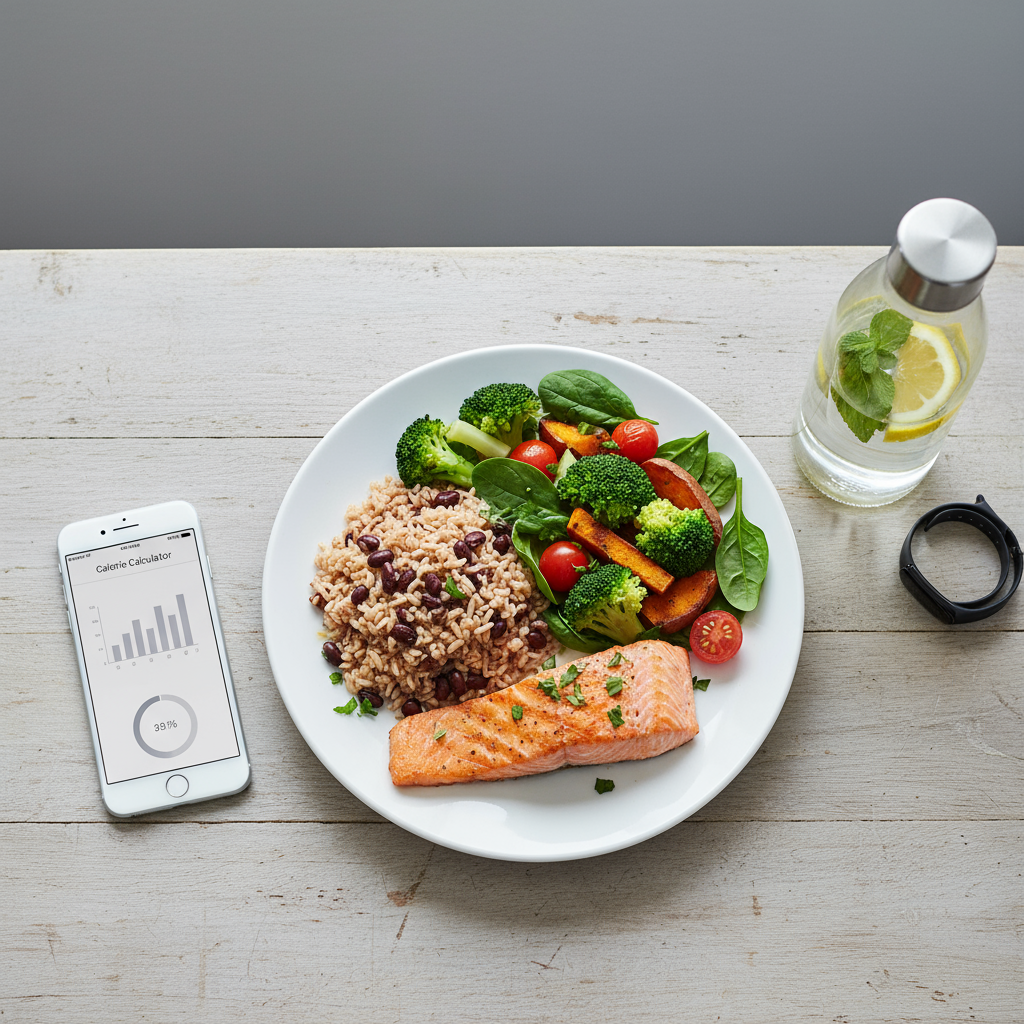
Figuring out how many calories you need each day? It’s honestly one of the smartest things you can do for your health and weight goals. Here’s the thing—your calorie needs aren’t the same as your friend’s, your coworker’s, or that fitness influencer you follow on Instagram. They’re uniquely yours, shaped by everything from your age and gender to how much you move throughout the day. When you know your personal calorie sweet spot, you can finally stop guessing about what to eat and start making choices that actually work. Whether you’re trying to lose weight, maintain where you are, or build muscle, having this number gives you a roadmap. Plus, it helps you avoid those frustrating cycles of eating too little (hello, metabolism slowdown) or too much (goodbye, progress). Let’s dig into what influences your daily calorie needs and how to figure out what works for your body.
What Are Daily Calorie Needs?
Think of daily calorie needs as your body’s energy budget. Just like your car needs a certain amount of gas to run, your body needs a specific amount of energy to keep everything humming—breathing, heart beating, digesting food, and powering through your day. The tricky part? Everyone’s “gas tank” is different. A 6-foot-tall guy who lifts weights five times a week is going to burn through way more energy than someone who works a desk job and takes evening walks. Your metabolism (basically how fast your body uses energy) plays a huge role too. Some people are like sports cars with high-performance engines, while others are more like efficient hybrids. Neither is better or worse—they just have different fuel requirements. That’s why those one-size-fits-all diet plans rarely work long-term. If you’re looking to optimize your results, learning about how high protein foods support weight loss can really help you understand how different nutrients affect your energy and appetite.
Age and gender matter more than you might think. As we get older, our metabolism typically slows down—it’s just part of life. Men usually need more calories than women because they generally have more muscle mass, and muscle tissue is like a calorie-burning furnace even when you’re just sitting around. Your activity level can completely change the game too. We’re talking everything from fidgeting at your desk to training for a marathon. Even your food choices influence how your body processes energy. Staying properly hydrated keeps your metabolism running smoothly, as we explore in how hydration supports weight loss and metabolism. And don’t forget about fiber—eating plenty of fiber-rich foods not only keeps your digestive system happy but can also impact how your body uses calories, something we cover in our nutrition and dietary fiber guide. All these pieces of the puzzle show why calculating calorie needs isn’t as simple as plugging numbers into a generic formula.
Key Factors Affecting Calorie Requirements
Let’s break down what really drives your daily calorie needs:
- Age and Metabolism: Younger folks typically burn calories faster thanks to growth spurts and naturally higher muscle mass. As we age, our metabolic rate tends to slow down, which means we might need fewer calories to avoid unwanted weight gain.
- Gender Differences: Men usually pack more lean muscle than women, and since muscle tissue burns more calories even at rest, guys generally need more fuel to keep their engines running.
- Body Size and Composition: Here’s where it gets interesting—muscle burns way more calories than fat tissue. So someone who’s built like a linebacker will need more calories than someone with the same weight but less muscle mass.
- Physical Activity Level: This one’s huge. A couch potato and a CrossFit enthusiast might as well be different species when it comes to calorie needs. Your job matters too—desk work versus construction work can mean hundreds of calories difference per day.
- Diet and Hydration: Quality nutrition helps your metabolism run like a well-oiled machine. Drinking enough water and eating fiber-rich foods keeps your body’s calorie-burning processes working efficiently.
Understanding these factors helps explain why your best friend can eat pizza every day and stay thin while you gain weight just looking at a donut. (Life’s not fair sometimes, right?) But here’s the good news—once you understand your personal equation, you can work with your body instead of against it.
Now that you know what influences your calorie needs, let’s talk about actually calculating your personal number. There are several proven methods and tools that can give you a solid starting point for planning your meals and workouts. In the next section, we’ll walk through the most reliable formulas and show you how to use technology to make this whole process easier and more accurate. You’ll walk away with a clear target that takes the guesswork out of your nutrition plan.
Methods to Calculate Your Daily Calorie Needs
Ready to crunch some numbers? There are several ways to calculate your daily calorie needs, from time-tested mathematical formulas to sleek digital calculators that do the heavy lifting for you. The most popular formulas—Harris-Benedict and Mifflin-St Jeor—take your basic stats (age, gender, weight, height) and calculate your basal metabolic rate (BMR). That’s basically how many calories you’d burn if you stayed in bed all day. Then they factor in your activity level to get your total daily energy expenditure (TDEE)—and boom, you’ve got your calorie target. If you’re particularly athletic, the Katch-McArdle formula might be more your speed since it considers lean body mass. These aren’t just random equations someone made up—they’re backed by solid research and used by nutritionists and trainers worldwide. Want to make tracking even easier? Check out fitness and weight loss apps that can calculate your calories, track your food, and monitor your progress all in one place.
Online calculators are where things get really convenient. The good ones walk you through a series of questions and spit out a personalized calorie goal in seconds. But here’s the catch—not all calculators are created equal. You want one that uses proven formulas and lets you customize based on your specific situation. The beauty of these digital tools is that they’re not set-it-and-forget-it. As your weight changes, your activity level shifts, or your goals evolve, you can easily recalculate and adjust. It’s like having a nutrition expert in your pocket. To really maximize your results, pair your calorie calculations with smart strategies like portion control and following healthy meal plans for weight loss. These approaches help you not just hit your calorie target, but do it in a way that keeps you satisfied and energized.
Common Formulas
Here are the three heavy hitters when it comes to calorie calculation:
- Harris-Benedict Equation: The classic formula that’s been around forever. It uses your weight, height, age, and gender to calculate your BMR, then multiplies by an activity factor. It’s reliable and widely accepted, though some experts think it runs a bit high for modern lifestyles.
- Mifflin-St Jeor Equation: The newer kid on the block that many professionals prefer. It tends to be more accurate for today’s population and takes into account that we’re generally less active than people were when Harris-Benedict was developed.
- Katch-McArdle Formula: This one’s special because it focuses on lean body mass instead of total weight. Perfect if you’re muscular or athletic, since it recognizes that muscle burns more calories than fat.
Using Online Calculators
Online calculators can be incredibly helpful, but you’ve got to choose wisely. Here’s what to look for:
- Select calculators that use validated scientific formulas and regularly update algorithms to reflect new research. You want accuracy, not some random formula someone cooked up in their basement.
- Input accurate and current data about your weight, height, age, and activity routines. Garbage in, garbage out—if your numbers are off, your results will be too.
- Use calculators that offer tracking features or integrate with fitness apps. The best ones help you monitor changes and adjust as you progress toward your goals.
- Consider calculators that factor in lifestyle goals, such as weight loss, maintenance, or muscle gain, allowing them to suggest tailored calorie adjustments appropriately. Generic advice won’t cut it if you have specific targets in mind.

Here’s the thing about understanding your daily calorie needs—it’s way more than just crunching numbers. It’s actually the foundation for making smart choices that line up with your health and weight goals. We’ve covered how your age, gender, body composition, and how active you are all play into what your body actually needs. And you know what? Once you get these factors, you can finally ditch those one-size-fits-all diet plans and create something that works for YOUR body.
Getting your calorie calculation right? That’s your ticket to managing energy balance like a pro. Whether you’re trying to lose weight, build muscle, or just maintain where you are right now.
Now, let’s talk about putting this knowledge to work. You’ve got options—from those classic formulas like Harris-Benedict and Mifflin-St Jeor to super user-friendly online calculators that do the heavy lifting for you. The key is understanding how your physical activity fits into the picture. This helps you turn those calorie targets into actual meal plans and workout routines that make sense. When you adjust your intake based on realistic goals (keyword: realistic), you’re setting yourself up for sustainable progress while avoiding those nasty pitfalls like extreme calorie restriction or completely ignoring nutrient balance.
Taking control of your calorie intake and pairing it with solid fitness and nutrition strategies? That’s where the magic happens. Start with accurate calculations, then track your progress and adapt as your body and lifestyle change—because they will. Match your calorie targets with effective workouts and smart food choices to rev up your metabolism and promote fat loss while keeping that hard-earned muscle. This approach doesn’t just give you better physical results; it teaches you to actually listen to what your body needs.
Ready to take action? Let me give you some concrete next steps. Mastering weight loss and body measurements is huge for tracking progress beyond what the scale tells you—trust me, you’ll stay way more motivated when you see those visible changes. Mix in some fitness tips for weight loss that balance cardio and strength training to maximize calorie burn safely. And here’s something people often overlook: staying properly hydrated is absolutely key for supporting metabolism and curbing hunger. Dive into how weight loss and water intake can seriously enhance your results.
Want to dig deeper into maintaining muscle while boosting fat loss? Learning about weight loss and resistance training will give you invaluable insights. Plus, when you pair calorie management with nutrient-dense, balanced meal plans (like those in healthy meal plans for weight loss), you create sustainable energy and actually enjoy your food.
Don’t sleep on exploring nutrition and dietary fiber either. Understanding how fiber-rich foods contribute to digestion, satiety, and metabolic health is a game-changer for effective weight management. When you use all these resources together, you’ll have the power to craft a personalized, sustainable lifestyle that actually supports your goals.
Look, the knowledge you’ve gained here equips you to make informed, confident decisions every single day. Trust the process of calculating and adjusting your calories, then blend it with consistent fitness and mindful nutrition choices. Your health journey isn’t a straight line—it’s dynamic and evolving. But with clarity on your calorie needs and these practical tools in your back pocket, you can achieve results that actually last. So take charge today, explore the guides we’ve shared, and embrace this journey toward a healthier, more energized version of yourself.
Frequently Asked Questions
-
What is the best formula to calculate daily calories?
- The Mifflin-St Jeor Equation is widely considered accurate for most people, balancing simplicity and personalization.
-
How does exercise affect calorie needs?
- Physical activity increases calorie requirements proportionally to the exercise’s intensity and duration, raising your total daily energy expenditure.
-
Can I rely on online calorie calculators?
- Yes, but it’s important to select reputable calculators, enter precise personal data, and update your inputs regularly for the best results.
-
How often should I recalculate my calorie needs?
- Recalculation is advisable when your weight, activity level, or health goals change to ensure your calorie target remains accurate and effective.
-
When should I see a nutritionist?
- Consult a professional if you have complex medical conditions, metabolic issues, or need personalized guidance beyond general calorie calculations.